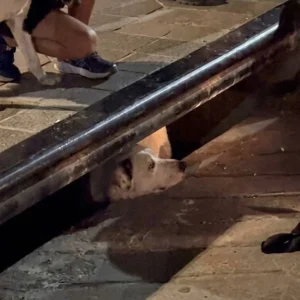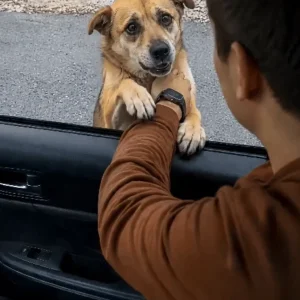
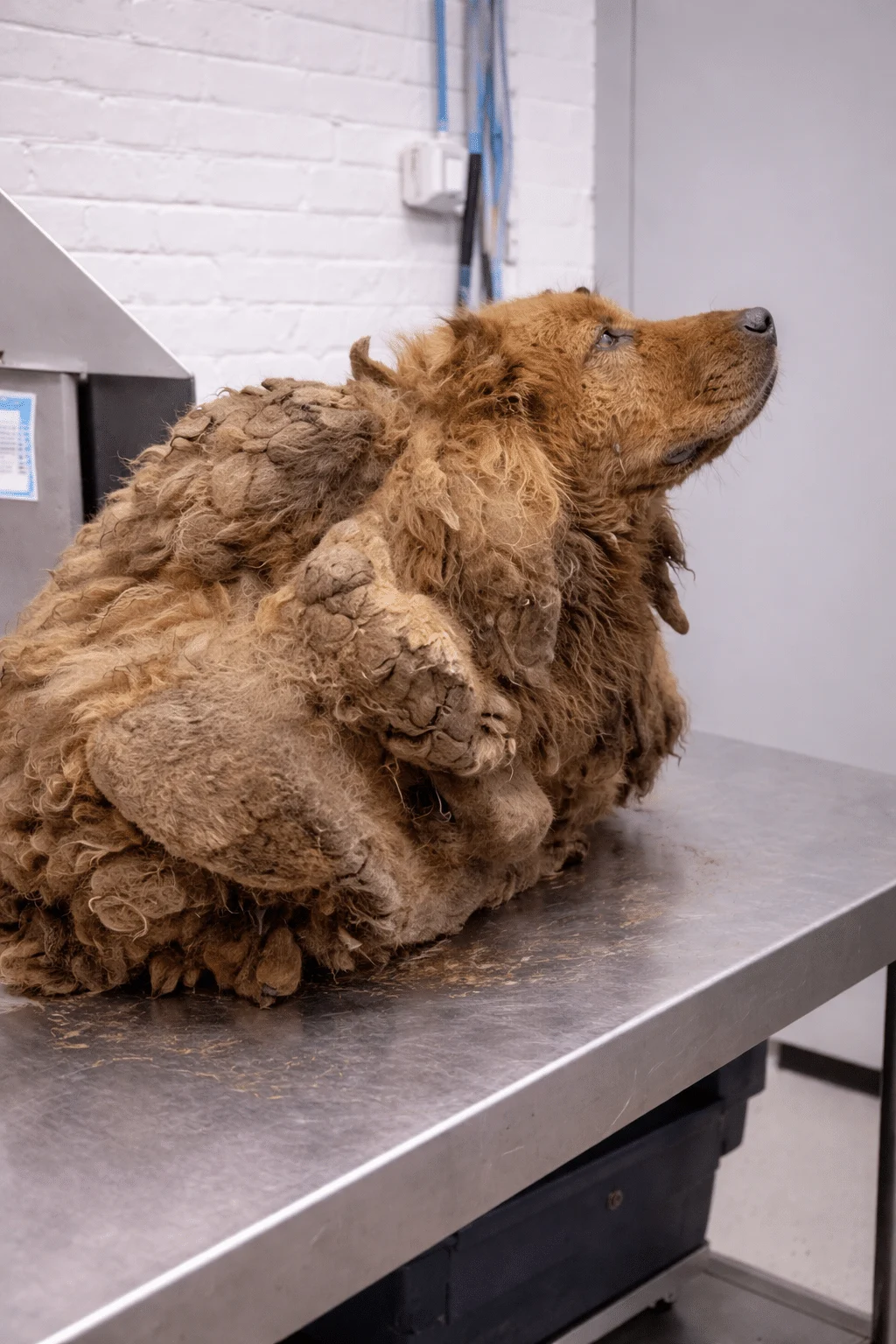
When Sprout was first discovered, what lay beneath the thick layers of fur was a mystery. His natural features were hidden under dense, compacted mats that made even standing a formidable challenge. It was almost impossible to recognize him as a dog. The sheer weight and restrictiveness of his coat made every movement an ordeal, and no one could immediately see the animal beneath.
The condition of Sprout’s fur was unlike simple tangles or length. The mats had hardened into heavy, dirt-laden clumps that enveloped his body entirely, fusing together in places to form a rigid shell. His legs, face, and shape were all obscured, their outlines erased by years of neglect. Attempts to move showed the tremendous effort required—each step and shift felt as if he were dragging a burden too heavy for him to carry.
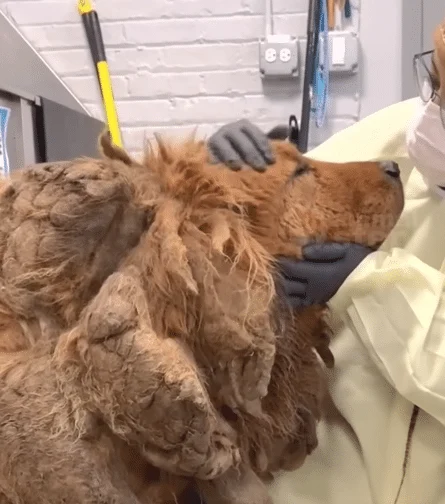
It wasn’t until people began gently reaching out that Sprout allowed the first meaningful connection with humans. In one early interaction, he slowly lifted his head, a small but significant movement that hinted at the possibility of trust and change. This moment marked the beginning of a journey none could predict.
Video: Sprout Slowly Lifts Head After First Gentle Human Touch
Facing the Challenge Beneath the Fur
Sprout’s rescue involved far more than just removing hair. The severity of his condition meant a routine grooming was out of the question. His matted coat was so thick that it blurred the boundary between fur and skin, making any careless cutting hazardous. This demanded veterinary sedation—a careful medical decision to ensure Sprout’s safety and minimize stress during the lengthy procedure.
Under close supervision, the team began their work methodically. They used specialized tools to gradually undo the outer layers before approaching the skin, where unknown sensitivity or wounds could lie hidden. This process revealed more than just matted fur; it exposed the harsh reality of Sprout’s past struggles and the layers of neglect he had endured.
Piece by piece, the officer of dense mats came away from his legs, belly, back, and finally his face, revealing the dog beneath. The surgery-like care and patience transformed what had looked like an immobile mass into a living being regaining form. It was a slow unveiling—each inch uncovered telling a story of endurance.
Coming to Light After Thirty-Two Pounds Fell Away
By the end of the procedure, nearly 32 pounds of matted fur had been shaved from Sprout’s body—an astonishing weight for any dog to carry. Standing free of this immense burden, Sprout revealed a much smaller, lighter frame. His legs, previously lost under heavy fur, now showed their natural shape. His face, once hidden, came into view with soft, alert eyes.
The removal of the mats did not erase Sprout’s difficulties. His skin was raw in places, affected by prolonged coverage, and he remained fragile physically. Yet a remarkable change was clear: the oppressive weight that had pulled and restricted him was gone. For the first time, Sprout could feel his body without the constant drag of the fur around it.
Waking from sedation, his movements were tentative but hopeful. Raising his head was a small but significant sign that he was beginning to reclaim agency over himself. The very act of lifting his gaze and acknowledging his surroundings suggested an opening—a moment when healing could truly begin.
A Gentle Renewal in a Quiet Home
As Sprout left intensive medical care, he entered Elisa’s foster home—a place designed for rest and slow recovery. Surrounded by calm rooms, soft bedding, and steady meals, Sprout was given the space to adjust to a new reality. The sudden absence of his heavy coat meant his limbs had to learn movement anew, muscles weakening after carrying such a weight had to rebuild.
Without pressure, Sprout took cautious steps—both physically and emotionally. He would observe before engaging, finding comfort in quiet observation before exploring further. Medical care for his skin infections continued, and caregivers monitored his strength and appetite carefully. Gradually, little by little, subtle signs of progress emerged.
Sprout’s curiosity started to outpace his hesitation. He greeted Elisa’s presence with gentle movements of his tail and began to respond to interaction with interest rather than submission. Rather than retreat to a single corner, he explored the foster home with tentative confidence.
Introducing him to other dogs was considered carefully. The calm observations and slow acclimation allowed Sprout to find companionship on his own terms. Soon, he was moving alongside others in the yard—not out of obligation but because the newfound lightness in his body let him enjoy the simple pleasures of canine life.
The Quiet Strength of a Dog Rediscovered
One of the most telling moments came as Sprout began navigating the yard, moving from cautious, measured steps to quicker, more assured strides. His body, once hindered severely, now bore his weight with less effort. Running across the grass, following others, or choosing to approach Elisa, he showed signs of emerging vitality.
The changes weren’t instantaneous or dramatic in a flashy way, but their significance was profound. What had been an animal hidden beneath layers of neglect was now seen—the gentle, curious dog growing more comfortable with affection and companionship.
His journey depended on many: from the initial rescue by Chicago Animal Care and Control, to the sustained efforts of the rescue group One Tail at a Time, to the veterinary team and the devoted foster family. Without each of those steps, the transformation might not have been possible.
“The coat could be removed in several hours. Rebuilding his physical strength and confidence required much longer.”
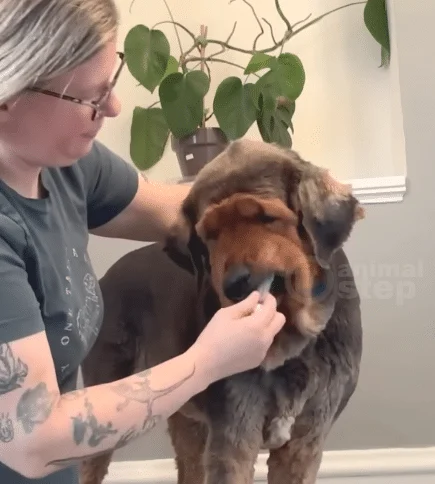
Sprout’s story is not one fabricated from tragedy or heroism alone; it is built on quiet moments of persistence and care—on people who refused to stop at the surface and who stayed long enough to see the dog beneath the burden.
“Sometimes, the smallest sign of trust is the moment that tells you how far an animal has already come.”