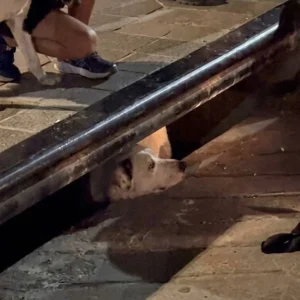
Inside a deserted home, a small dog kept herself barely visible through a narrow crack in a doorway. Her eyes, wide and watchful, spoke more than her silence ever could—there was a deep-rooted fear shaped by abandonment and survival alone. Though the house was empty, it remained her refuge, a fragile barrier between her and the world that had once turned away.
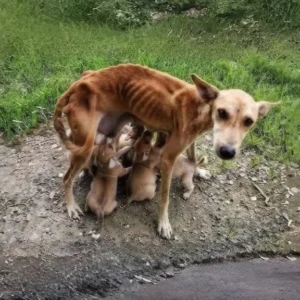
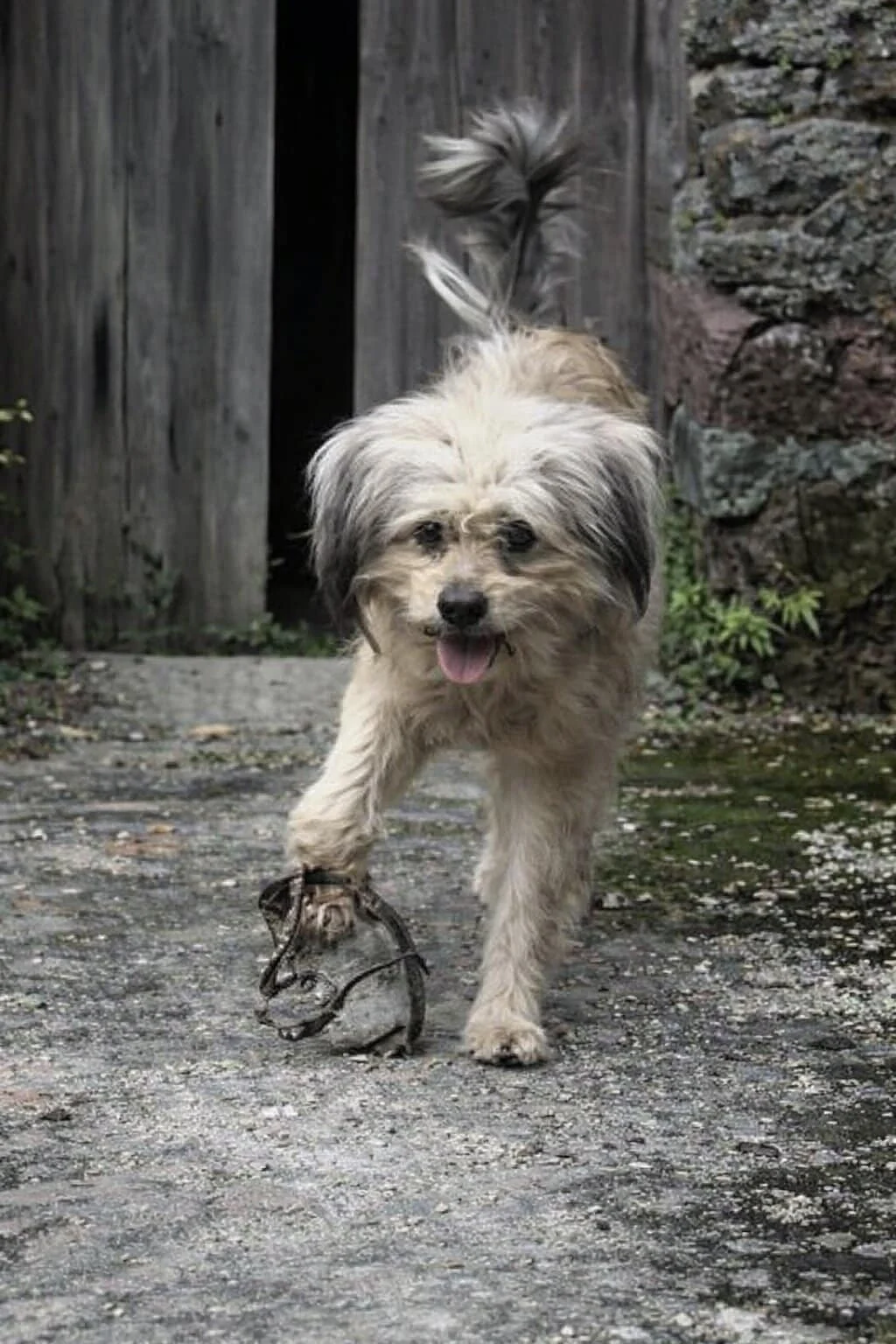
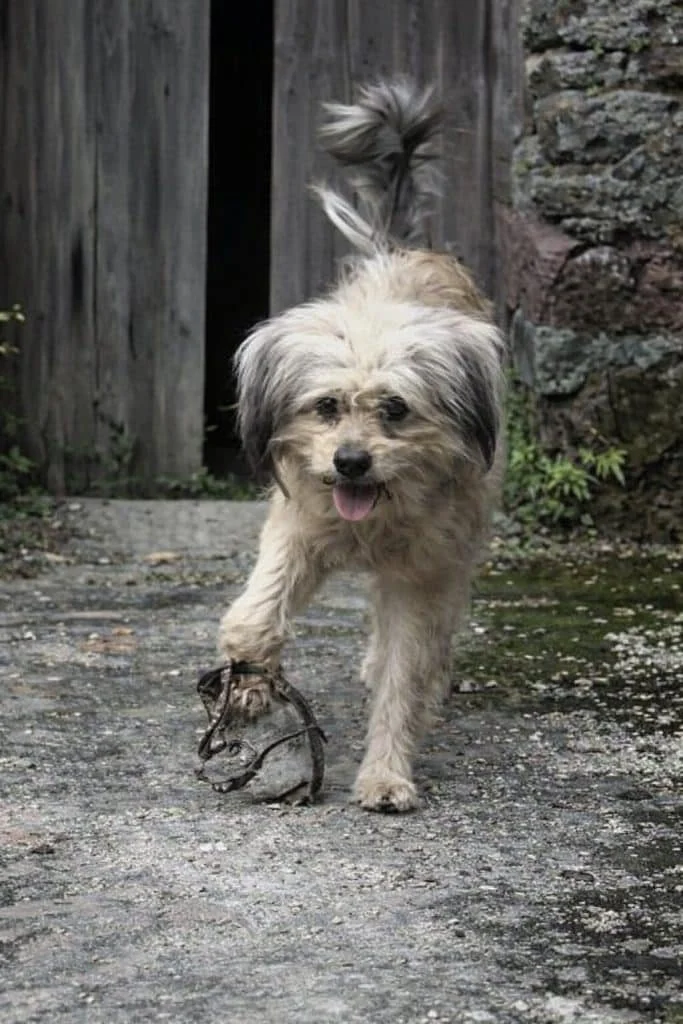
The dog’s cautious stance reflected the many days and nights she had quietly endured. A rusted metal snare coiled tightly around one of her legs, a painful reminder of a struggle prolonged without intervention. Hunger and solitude shadowed her every movement, yet she persisted by retreating further into the safety of the worn structure.
When a passerby paused to notice her distress, the decision was made not to rush in but to summon help—those who understood that care needed patience. And so, a delicate dance began: slow steps toward trust, marked by a single, hesitant paw extended through the doorway, offering a fragile connection to the strangers who came with hope and gentle hands.
Video: Rescue unfolds as a dog offers a hesitant paw after hiding behind a rusted snare
When Caution Guides Every Move
The rescue team quickly recognized that force would only deepen her fear. She did not bark nor growl; instead, she remained hidden, measuring every sound and shadow outside her shelter. Offering food near the doorway was an invitation, not a command—one she declined at first, hesitant to abandon her safe distance.
With time, curiosity edged out anxiety. What began as a faint shift in posture evolved into a cautious approach. Her body stayed tense, every muscle ready to pull back, yet hunger and the possibility of kindness began to outweigh the memory of pain. And then, the moment came: a single paw reached out, breaking the barrier of silence between the frightened dog and the rescuers.
The rusted snare tightly wrapped around her leg was revealed not just as an injury but as a symbol of resilience. It had likely restrained her for weeks, possibly longer, limiting her steps but not her will to survive. Allowing others to see this vulnerability was an unspoken sign that something inside her was beginning to shift.
Gentle Hands and the First Touch of Trust
The process to remove the snare had to be deliberate and slow. Tugging or pulling risked aggravating both injury and fear. One rescuer cradled her leg with care, while another worked steadily to loosen the rusted metal. The dog trembled, watching everything, uncertain yet still calm enough not to flee.
Then came a quietly profound instant: she reached out with her tongue, gently licking the hand of the person supporting her. That small act of connection held weight far beyond the moment itself. It was the gesture of a dog who had been left behind, who had carried the burden of pain alone, yet chose to respond to kindness with its own gentle grace.
When the last link of the snare was freed, relief was tangible. Though still weak and sore, the dog was no longer physically trapped, and the shackles of isolation began to loosen.
Finding Safety Outside the Door
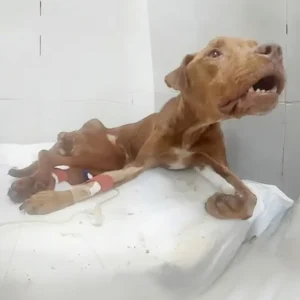
Transported to a care facility, the dog saw a world transformed. Water was always at her reach. Meals arrived without struggle. Where hard floors had once confined her exhausted body, soft bedding now cradled her fragile frame. She remained alert, listening to every noise, reluctant to place full trust in this new environment.
No one hurried her. Her caretakers understood the necessity of patience, sitting quietly to let her observe without pressure. As the hours passed, tension in her body eased. Breathing grew steadier. Eating became possible. For perhaps the first time in a long while, sleep did not come with the shadow of fear.
Healing Beyond the Physical Wounds
Medical attention focused on the dog’s leg—cleaning, medicating, and monitoring her progress as she gradually regained the ability to put weight on it. These physical steps were small but crucial, each one paving the way toward greater comfort and mobility.
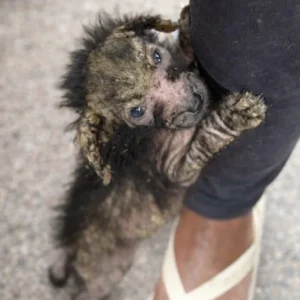
More revealing, however, was her emotional journey. Initially retreating to the far corners when approached, she slowly learned that closeness did not always mean threat. Gentle touches were accepted without stiffening. Eventually, she even moved toward a caregiver, rather than waiting passively.
These subtle shifts reflected a quiet healing of trust that the dog once thought impossible. The guarded creature hidden behind the doorway was emerging with each interaction—showing hints of a gentle nature shaped not by aggression but by cautious survival.
“Every dependable meal taught her that she would not be forgotten. Every clean bandage showed that her discomfort mattered.”
Her recovery was not a rewriting of the past but a layering of new, safer experiences to rebuild the confidence that abandonment had shattered.
Stepping Into a New Life
The empty house, once a sanctuary forged out of necessity, ceased to be the defining space of her existence. No longer did she watch furtively through a narrow gap, body braced to hide her injuries from view. She was no longer alone in her search for sustenance or shelter.
The rusted snare had been removed at last. The past, though present in quieter ways, no longer dictated every step she took. The moments of gentle patience shown by a rescuer and a thoughtful team had begun to restore something essential: a sense that she could be seen, cared for, and safe.
Her path forward remains one of measured care and quiet courage, each day building on the last with careful attention and respect.
“Sometimes, the smallest sign of trust is the moment that tells you how far an animal has already come.”